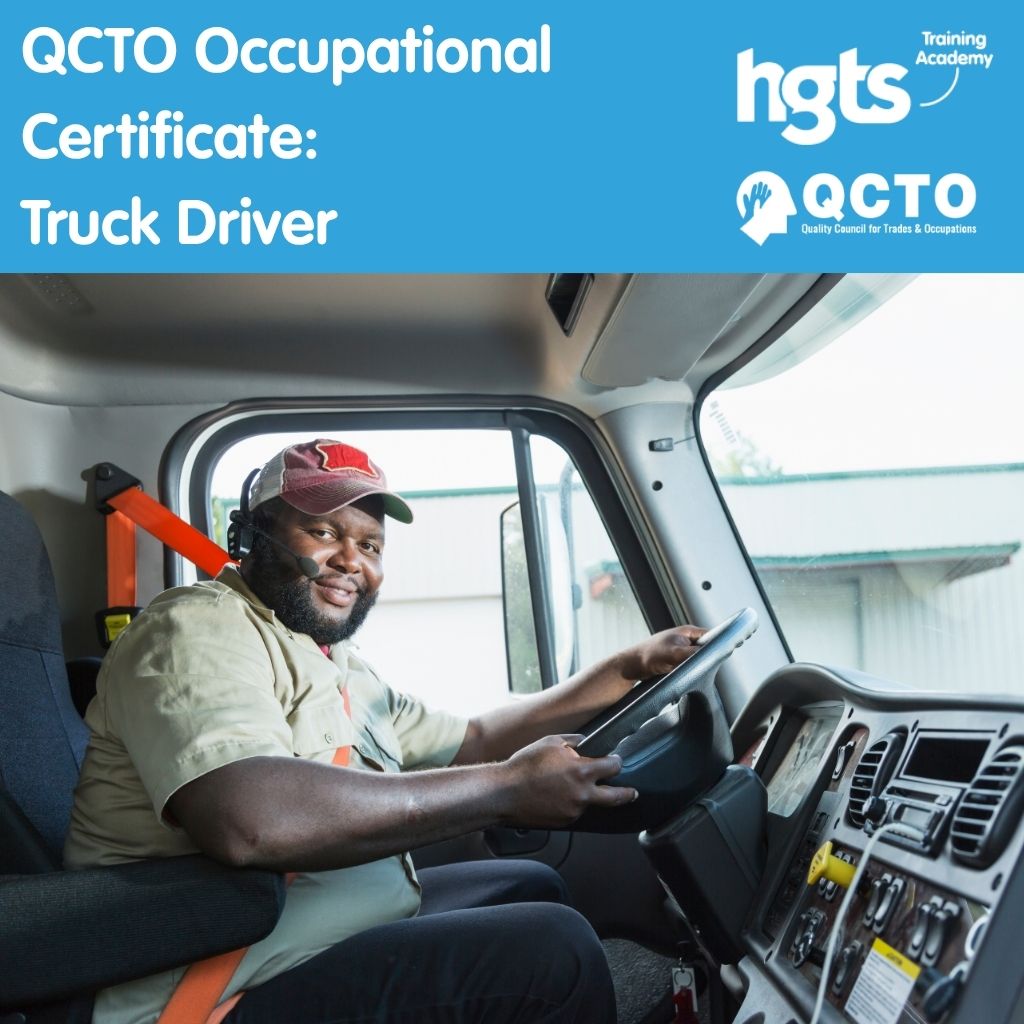
Description
Programme Duration
- Duration: Varies according to delivery and workplace model
- Mode of Delivery: Classroom‑based learning, practical simulation and workplace‑based experience
- Assessment: Internal formative assessments plus External Integrated Summative Assessment (EISA) conducted through the AQP (TETA)
Purpose of the Programme
The primary purpose of the Occupational Certificate: Truck Driver is to:
- Prepare learners to operate a truck safely and professionally
- Ensure compliance with road traffic, safety and transport legislation
- Develop skills in vehicle inspection, cargo handling and load securement
- Enable effective trip planning, journey management and reporting
- Promote ethical behaviour, environmental responsibility and energy efficiency
- Supply industry with competent, work‑ready truck drivers [73
Learning Outcomes
Upon successful completion of the qualification, learners will be able to:
- Plan and prepare a truck for transportation
- Operate a truck safely in accordance with road traffic regulations
- Inspect vehicles and complete inspection reports accurately
- Secure loads correctly and manage cargo safely
- Apply defensive and economical driving techniques
- Complete required documentation and reporting processes
- Comply with health, safety, quality and environmental requirements
Programme Content
The qualification consists of three compulsory components:
- Knowledge Modules
Key knowledge areas include:
- Health, safety, quality and transport legislation
- Environmental sustainability, energy efficiency and ethics
- Road transport industry context
- Business essentials, communication and customer relations
- Transport risk management
- Operating a truck (driving theory, journey management, load securement)
- Practical Skills Modules
Learners develop hands‑on competence in:
- Preparing trucks for loading, offloading and transportation
- Operating a truck (start‑up, driving and shut‑down procedures)
- Inspecting vehicles and completing inspection reports
- Working with basic electrical components relevant to truck operation
- Workplace Experience Modules
Structured workplace exposure includes:
- Planning transportation of cargo
- Complying with national road traffic regulations
- Documentation and reporting procedures
Learners complete workplace experience under supervision within an approved transport environment.
Entry Requirements
- ABET Level 1 (minimum)
- Compliance with statutory driving and medical requirements applicable to heavy vehicle operation
- Valid driver’s licence and Professional Driving Permit (as required by law)
Assessment and Certification
- Learners must complete all knowledge, practical and workplace modules
- Learners are required to pass the External Integrated Summative Assessment (EISA)
- Successful learners are awarded the Occupational Certificate: Truck Driver by the QCTO
Target Group
This qualification is suitable for:
- Aspiring truck drivers
- Employed drivers seeking formal recognition
- Logistics and transport employees
- Learners entering the road freight and transport industry
- Employers developing compliant and competent drivers
Benefits for Employers and Learners
For Learners
- Nationally recognised occupational qualification
- Improved employability and career mobility
- Professional driving competence
- Compliance with industry and legal requirements
For Employers
- Skilled, safety‑conscious truck drivers
- Reduced risk, accidents and compliance issues
- Improved operational efficiency
- Support for learnerships and skills development initiatives
Accreditation
This qualification is delivered in accordance with QCTO policies and curriculum requirements and assessed through the Transport Education Training Authority (TETA) as the designated Assessment Quality Partner.