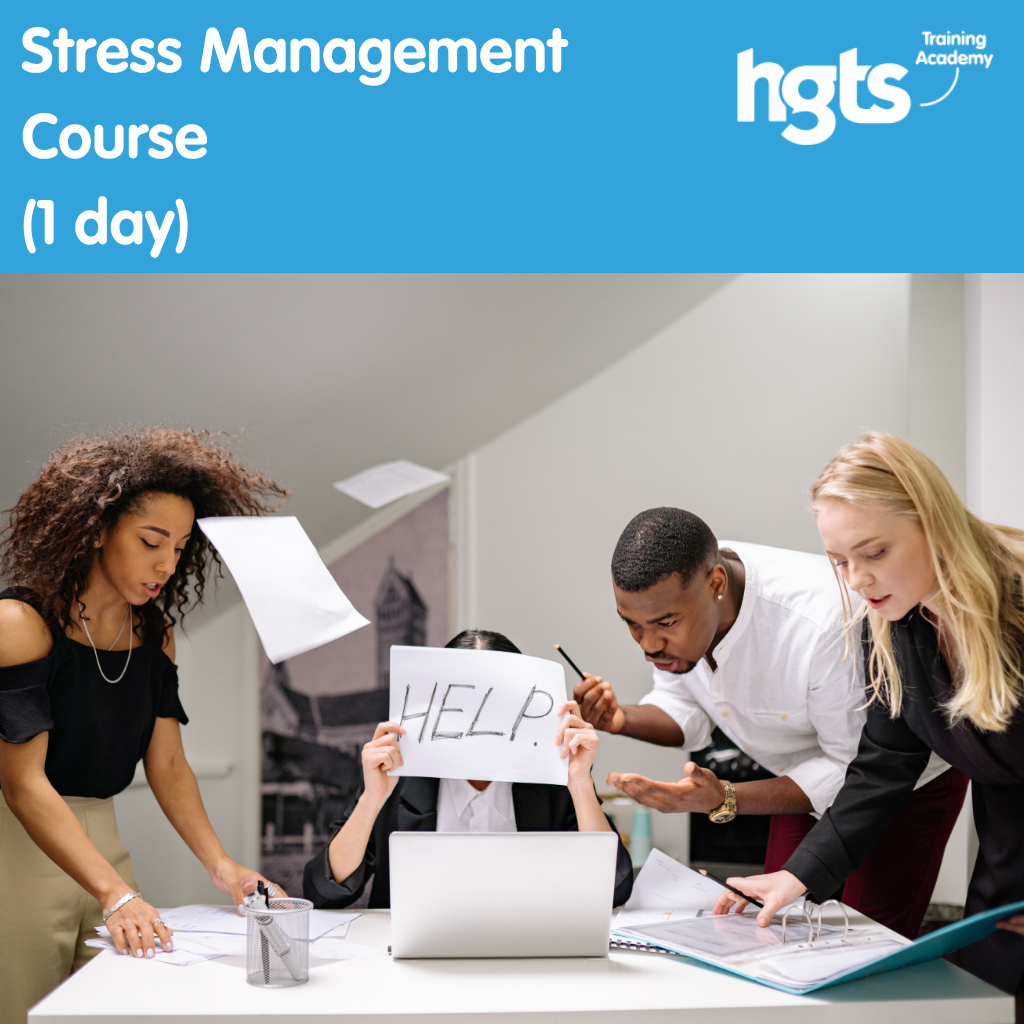
Description
Duration: Typically delivered over 1 day depending on organisational needs.
Learning Outcomes
By the end of this course, learners will be able to:
- Understand Stress
- Define stress and the stress cycle
- Explain the “fight or flight” response and its physical, emotional, and cognitive effects
- Recognise the difference between acute and chronic stress
- Identify Internal and External Stressors
- Distinguish between stressors you can control (internal) and those you can’t (external)
- Explore how thoughts, beliefs, upbringing, and expectations influence stress
- Understand how modern 21st‑century stress differs from earlier generations
- Recognise the Difference Between Positive and Negative Stress
- Identify the benefits of positive (eustress) stress
- Understand how negative stress impacts performance, motivation, and physical health
- Assess personal stress levels using self‑assessment tools
- Manage Four Key Workplace Stress Types
Based on Dr. Karl Albrecht’s model:
- Time stress
- Anticipatory stress
- Encounter stress
- Situational stress
Learn practical techniques to manage each type directly and effectively.
- Develop Healthy Coping Mechanisms
- Replace unhealthy coping habits with healthier alternatives
- Use relaxation techniques, mindfulness, and breathing exercises
- Understand the “4 A’s” — Avoid, Alter, Adapt, Accept
- Build emotional intelligence and communication skills to navigate stress better
- Create a Personal Stress‑Management Action Plan
- Use the “Wheel of Life” to assess life balance
- Identify priority areas needing attention
- Build a personalised “Stress Relief Toolbox”
- Set realistic, achievable lifestyle adjustments for long‑term wellbeing
Course Modules
Module 1: Understanding Stress
- What is stress?
- What is stress management?
- Impact on body, thoughts, behaviour, and emotions
- Fight‑or‑flight response explained
Module 2: Internal vs External Stressors
- Personality‑based stress (internal)
- Environment‑based stress (external)
- Perfectionism: healthy vs unhealthy
- Managing and reframing internal thoughts
Module 3: Positive vs Negative Stress
- Benefits of eustress
- Risks and symptoms of distress
- Acute vs chronic stress
- Personal stress evaluation tools
Module 4: Four Common Workplace Stresses
- Time, Anticipatory, Encounter, Situational stress
- Practical strategies and reflection exercises for each type
Module 5: Stress Management & Coping Techniques
- Lifestyle and wellness strategies
- Relaxation, mindfulness and breathing techniques
- Improving sleep, diet, exercise
- Setting boundaries and saying “no”
- Time‑management and prioritisation
Building supportive relationships
Delivery Format
- Face‑to‑face workshops
- Virtual (MS Teams / Zoom)
- Blended format
- Includes individual exercises, group discussions, self‑assessments, videos and practical demonstrations